
What Linka Took Away from Paytech Conf 2026 in Bogotá and What the Market Is Confirming
By Linka Finance
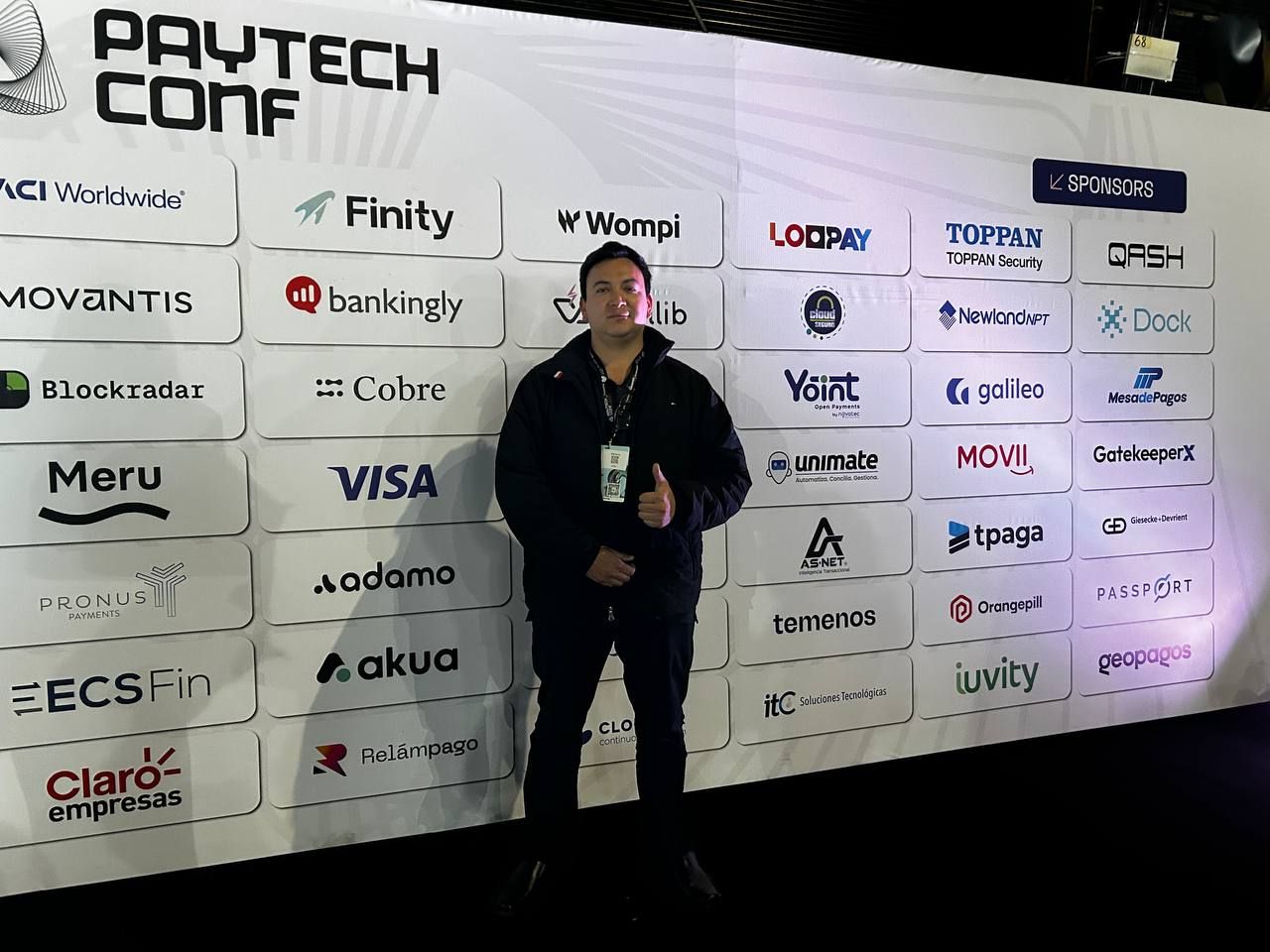
Correspondent banking in Latin America still charges 2 - 7% per international transfer, takes 3–5 business days to settle, and requires pre-funded accounts that lock working capital in transit. In Bogotá on May 29, Linka's CEO Victor Egoavil joined more than 1,000 executives and founders at Paytech Conf 2026 the region's main annual event on digital payments to have an honest conversation about what's actually changing, and what isn't.
This article shares what we heard, what the data confirms, and why B2B cross-border payments in Latin America are at an inflection point that matters for CFOs, treasurers, and import/export operators.
The State of Cross-Border B2B Payments in Latin America
The numbers are not small. Global B2B cross-border transactions reached $31.7 trillion in 2024 and are projected to grow to $47.8 trillion by 2032, according to FXC Intelligence's market sizing report. Latin America accounts for a growing share of that volume, driven by SMEs that are increasingly connected to international supply chains: a Mastercard/PCMI study (2025) found that three out of five SMEs in the region already work with international suppliers.
The problem is that the infrastructure carrying those payments has not kept pace with the volume.
Traditional cross-border B2B payments via correspondent banking take an average of 3–5 business days to settle (BCG Global Payments Report, 2025). All-in costs wire fees, FX markups, and intermediary deductions typically land between 2% and 7% of the transaction amount. For a company processing $5 million in weekly cross-border payments, BCG estimates that between $15 and $25 million in working capital is perpetually locked in transit.
These are not theoretical problems. They are the operational friction that treasury teams in Colombia, Peru, Chile, and across the region manage every month.
What Paytech Conf 2026 Put on the Table
Paytech Conf 2026, organized by Latam Fintech Hub, structured its agenda around six axes that reflected the real pressures in the market: stablecoins and CBDCs, open payments, cross-border interoperability, agentic payments, immediate payment rails, and consumer behavior shifts. More than 370 entities participated, and 38 industry experts led sessions at the Vive Claro venue in Bogotá.
The event was not about trends in the abstract. The conversations we had with partners, payment operators, and fintech teams were grounded in specific operational questions: How do you reduce settlement time without introducing counterparty risk? How do you build a payment product that a Colombian importer or a Peruvian exporter can actually trust? What does regulatory compliance look like when flows cross three jurisdictions?
These are the questions Linka works with every day.
The Stablecoin Signal Is No Longer Early-Stage
One axis at Paytech Conf that generated significant discussion was stablecoins and their role in cross-border flows. The data behind that conversation is already in the market.
According to Fireblocks (2025), 71% of Latin American institutions are now using stablecoins for cross-border payments the highest regional adoption rate globally. EY's 2025 stablecoin survey found that 41% of current enterprise users report cost savings of at least 10% in B2B cross-border transactions, with midsize firms reporting savings of 10–20%.
B2B stablecoin payments surged from under $100 million per month in early 2023 to over $6 billion per month by mid-2025 a 60× increase in 30 months, according to Tazapay's 2026 Emerging Markets Payments report citing Fireblocks data.
In the US–Mexico corridor, Mizuho research reports that remittance fees via stablecoin rails have dropped to under 1%, compared to a 5 - 7% average on traditional channels.
This is not a pilot phase. It is adoption at scale. The conversations in Bogotá reflected that: the question has shifted from "whether" stablecoin infrastructure works to "which operational model makes it viable for my business."
How Linka Operates in This Environment
Linka settles international B2B payments across Latin America in under 24 hours using USDC and USDT stablecoin rails. The cost structure is transparent: a commission of between 2% and 6% depending on volume, with no hidden FX spreads or intermediary deductions that show up after the fact.
For importers and exporters, this means knowing exactly what a payment costs before it's sent and receiving confirmation of settlement within the same business day rather than waiting five.
Linka's trade finance desk extends working capital to companies that need to pay suppliers before collecting from their buyers a structural problem for any business managing inventory on international timelines. And for larger volume operations, Linka's OTC crypto desk handles USDC/USDT-to-fiat conversions with desk pricing, without routing through retail exchange rates.
Linka operates across Latin America, with headquarters in Lima, Peru, and active operations in markets including Colombia, Bolivia, Chile, and El Salvador.
Frequently Asked Questions
How do B2B cross-border payments with stablecoins work for companies in Latin America?
Stablecoin-based B2B payments work by converting the sender's local currency into a USD-pegged stablecoin (such as USDC or USDT), transmitting it on blockchain rails, and converting on the recipient's end. This process eliminates the correspondent banking chain and reduces settlement from 3 - 5 business days to under 24 hours. For businesses in Latin America, this means faster working capital cycles and predictable costs, since the FX conversion happens at a defined rate rather than through a bank's internal spread.
What are the real costs of international B2B payments in Latin America via traditional banking?
All-in costs for traditional cross-border B2B payments in the region typically range from 2% to 7% of the transaction amount, once you account for wire fees, FX markups, and intermediary bank deductions (BCG Global Payments Report, 2025). Settlement takes 3–5 business days on average, which means working capital is unavailable during that period. For a company processing significant weekly volumes, this can mean millions of dollars in funds that are effectively inaccessible for days at a time.
What is Trade Finance and why does it matter for importers and exporters?
Trade finance refers to financial instruments that bridge the gap between when an importer pays a supplier and when the importer receives and sells the goods or between when an exporter ships and when it receives payment. For companies operating across Latin American markets with international suppliers, this gap can stretch 30 to 90 days, creating a working capital shortage that limits growth. Access to trade finance allows businesses to operate at full capacity without tying up their own cash in inventory timelines.
What Comes Next
The conversations Linka had in Bogotá confirmed what the data had already been signaling: companies in Latin America are actively looking for payment infrastructure that matches their actual operational speed and cost tolerance.
For businesses running international supplier payments, import/export operations, or treasury functions that touch multiple currencies, the structural friction of traditional correspondent banking is a quantifiable cost not just an inconvenience.
If your business is paying international suppliers, managing cross-border receivables, or evaluating how stablecoins could fit into your treasury operations, talk to Linka.