
The B2B Fintech Revolution in Latin America: From Financial Inclusion to Corporate efficiency.
By Linka Finance
Less than a decade ago, talking about fintech in Latin America meant talking almost exclusively about financial inclusion: digital wallets for the unbanked, credit for segments ignored by traditional banking, mobile payments for informal markets. It was a necessary and real revolution, but one aimed primarily at individual consumers.
In 2026, that narrative is behind us. The new epicenter of the fintech revolution in the region is the corporate world. B2B companies are today the primary beneficiaries, and the primary drivers, of a transformation that is redefining how money moves, how trade is financed, and how treasury is managed at regional scale.
The Ecosystem in Numbers: From Promise to Infrastructure
According to the Inter-American Development Bank, Latin America and the Caribbean reached 3,069 fintech companies across 26 countries in 2023, representing growth of more than 340% since 2017. But the number of companies is not the most relevant fact. What matters is the qualitative leap that occurred between 2023 and 2026: the ecosystem stopped being a collection of experimental startups and consolidated itself as real financial infrastructure on which companies of all sizes now operate.
The Latin American fintech market reached $13.14 billion in 2024 and is projected to reach $49.58 billion by 2033, with a compound annual growth rate of 15.9%. And capital kept flowing: in 2025, the region attracted $2.5 billion in fintech investment, with payments capturing $300 million in Q4 alone, confirming that financial infrastructure remains a core investment thesis.
The First Wave: Financial Inclusion as a Starting Point
To understand where the sector stands today, you need to understand where it came from. The first major fintech wave in LATAM, roughly between 2015 and 2020, was built on a clear reality: the region had tens of millions of people without access to basic financial services.
Nubank in Brazil, Mercado Pago in Argentina and Mexico, Nequi in Colombia, Yape in Peru: all were born, or scaled massively, with the goal of bringing digital financial services to people and small businesses that traditional banking ignored. The result was transformative. Digital payments came to represent 48% of e-commerce transaction value and 30% of in-store value across Latin America by the end of 2024, while cash fell to 25% of in-person transactions.
That first wave fulfilled its mission. And in doing so, it built something that was not in the original plan: a digital infrastructure base on which the second wave could operate.
The Second Wave: Corporate Efficiency as the New Mandate
The second fintech wave in LATAM has a completely different profile. It does not talk about financial inclusion. It talks about efficiency, speed, transparency, and cost reduction for companies that already operate within the formal financial system but continue to pay the price of legacy infrastructure that was not designed for today's economy.
B2B payments through fintech platforms reached $4.9 trillion globally in 2025. ERP-integrated fintech tools are now deployed by 57% of companies with 200 or more employees, up from 48% the previous year. The corporate market did not just adopt fintech. It integrated fintech into its core processes.
In Latin America, this transformation has an additional dimension: the region's structural currency volatility turns international payment management into a first-order operational risk. An importer in Peru paying suppliers in dollars, or a company with subsidiaries in five countries that needs to settle between entities, faces costs and friction that simply do not exist in markets with more stable currencies.
The Three Technologies Defining the Second Wave
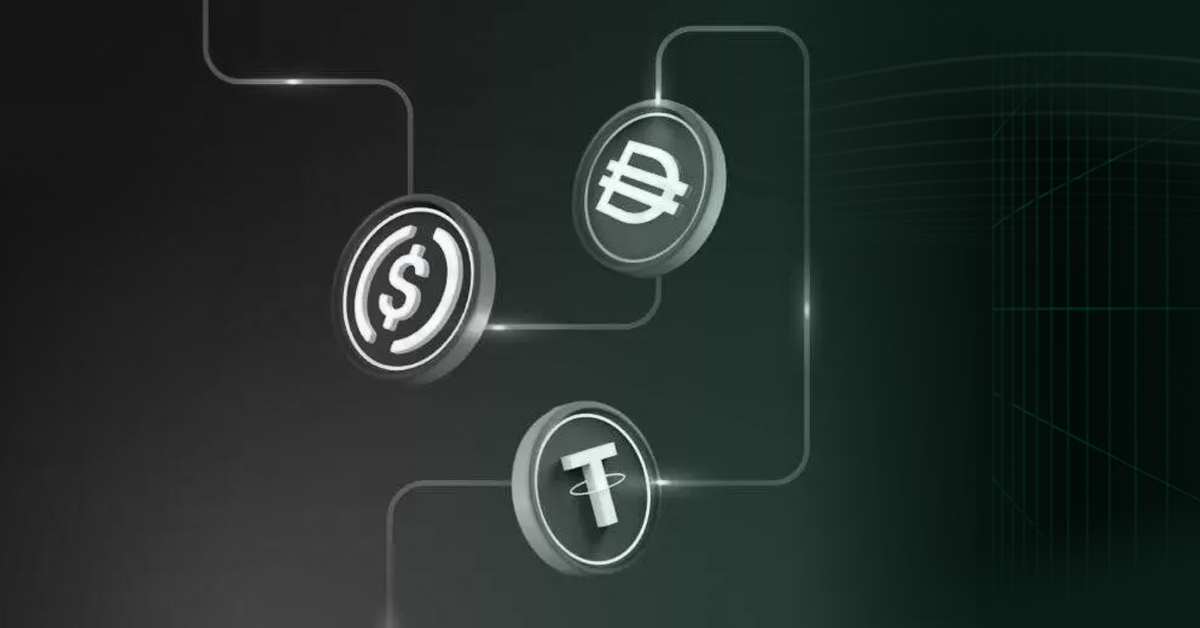
Three technologies are at the center of the B2B fintech transformation in LATAM in 2026.
The first is stablecoins. In Mexico's fintech ecosystem, 40% of companies in the payments and remittances segment project stablecoins as the fastest-growing technology. And it is not an isolated trend: in Brazil, the central bank reported that stablecoins represent nearly 90% of crypto flows, used primarily for international transfers. For B2B companies with regional operations, stablecoins resolve the bank spread problem, floating capital, and exchange rate opacity in one move.
The second is artificial intelligence applied to financial operations. In Colombia, 86% of fintechs already using AI have reduced operating costs by an average of 44%. In Mexico, 27% of fintechs now define themselves as AI-First in 2026, enabling a 44.5% reduction in operating costs and a 54.9% decrease in fraud. For corporate clients, that translates into better risk management, faster onboarding, and more informed financial decisions.
The third is open banking and financial APIs. The ability to connect corporate treasury systems directly with payment, financing, and FX management platforms, without going through traditional intermediaries, is redrawing the map of corporate financial infrastructure across the region.
The New B2B Fintech Client Profile in LATAM
The second-wave fintech client is not an unbanked individual. It is a CFO at a mid-sized company in Colombia looking to reduce the cost of supplier payments to Asia. It is a corporate treasurer in Mexico who needs to settle between five subsidiaries across the region without immobilizing capital for days. It is an importer in Peru who wants real-time visibility over the exchange rate applied to every operation.
Fintech investment in Latin America in 2025 was dominated by digital banking, neobanks, and specialized lending, with AI and stablecoins driving growth in payments. Investors are not betting on financial inclusion as the primary thesis. They are betting on corporate efficiency.
How Linka Operates in This New Paradigm
Linka is the concrete expression of this second wave in the corporate international payments segment. Built specifically for B2B companies in Latin America, it operates on stablecoin infrastructure to offer cross-border payments with real-time settlement, transparent exchange rates close to the mid-market rate, and without the correspondent chain that defines the traditional banking system.
For the CFO, corporate treasurer, or finance director still executing international payments through the legacy banking system, Linka represents exactly the leap that defines this second wave: from paying the price of obsolete infrastructure to operating on one designed for the financial reality of Latin America in 2026.
The fintech revolution in LATAM did not end with financial inclusion. Its most relevant chapter for the corporate world is only just beginning.
If your company is part of this second wave or needs to be follow us on LinkedIn and X for weekly insights on B2B payments, stablecoins, and corporate treasury in LATAM. Or reach out directly to explore how Linka can replace your legacy payment infrastructure.