Peru–Bolivia and Peru–Honduras Payment Corridors: What They Are and Why They Matter
By Linka Finance
A Peruvian exporter can close a sale with a client in Santa Cruz or San Pedro Sula, ship on time, and still wait weeks to get paid. The problem isn't the sale or the logistics. It's the payment corridor: the route money has to travel between the two countries.
Bolivia and Honduras share something that directly affects Peruvian companies trading with them: in both countries, getting dollars to pay abroad depends on more than having funds in local currency. In Bolivia, the dollar shortage has persisted since 2023. In Honduras, the central bank allocates dollars through an auction system that doesn't always cover full demand.
What is a payment corridor?
A payment corridor is the financial route between two countries through which payments flow: Peru–Bolivia, Peru–Honduras, Peru–China. Each corridor has its own conditions:
- Currencies involved and how they are converted.
- Banks and correspondents available to send and receive.
- FX regulation in each country: controls, limits, approvals.
- Actual costs and settlement times.
Two corridors can carry the same trade volume and work completely differently. For a treasury team, knowing the corridor is as important as knowing the client.
The Peru–Bolivia corridor: high trade, scarce dollars
Bolivia is one of Peru's closest trading partners, by geography and by volume. According to Sunat data processed by the Lima Chamber of Commerce's Idexcam, bilateral trade reached USD 407 million in the first quarter of 2026. On Peru's import side, the soybean chain stands out at about USD 146 million that quarter, 53% of Peru's purchases from Bolivia. Peru exports iron and steel bars, cleaning products, plastics, lubricants and manufactured goods.
The corridor's problem is currency. Since 2023, Bolivia has not been receiving the dollars its economy demands. A Bolivian company buying from a Peruvian supplier may hold bolivianos and still be unable to convert them to dollars in time to pay.
The market responded with virtual assets. The Central Bank of Bolivia (BCB) authorized virtual asset transactions through financial institutions under Board Resolution No. 084/2024, dated June 25, 2024. Use has grown quickly since then. Between January and May 2025, virtual asset transaction volume reached USD 294 million, 630% more than in the same period of 2024, according to the BCB.
For a Peruvian exporter, this means a Bolivian client may be willing to pay and still face delays or high costs to obtain dollars.
The Peru–Honduras corridor: a growing market with allocated dollars
Honduras is a smaller but growing market for Peru. According to ADEX, Peruvian exports to Honduras reached USD 118.9 million between January and November 2025, up 16.7% from the same period in 2024. Leading products include refined copper wire, palm oil, fresh grapes and chemicals. The Peru–Honduras Free Trade Agreement has been in force since January 1, 2017.
The corridor's problem is FX allocation. In Honduras, the Central Bank (BCH) distributes dollars through an auction on its electronic FX trading system. In April 2025, the BCH covered 75.5% of demand: it allocated USD 1.2565 billion against requests of USD 1.6641 billion. Honduran press reported that dollar access was a recurring problem for several productive sectors in 2023 and 2024, although complaints declined in 2025 as availability improved.
For a Peruvian exporter, the risk resembles Bolivia's, though it is less severe: the Honduran buyer depends on an allocation mechanism that can delay payment.
Why these corridors matter for Peru's foreign trade
- Collection risk. When the buyer can't get dollars, the Peruvian exporter is paid late, even if the client is solvent.
- Tied-up working capital. Every week of delayed collection is liquidity the Peruvian company can't use.
- Tougher commercial terms. To protect themselves, many exporters require advance payment, which makes them less competitive against suppliers from other countries.
- Hidden costs. When buyers source dollars through parallel markets or indirect routes, the extra cost ends up in the price or in lower purchase volumes.
In short, the payment corridor defines how much can be sold to a market, on what terms and at what risk.
How Linka approaches it
Linka is a B2B fintech headquartered in Lima that operates across Latin America. In corridors with restricted dollar access, its three services play different roles:
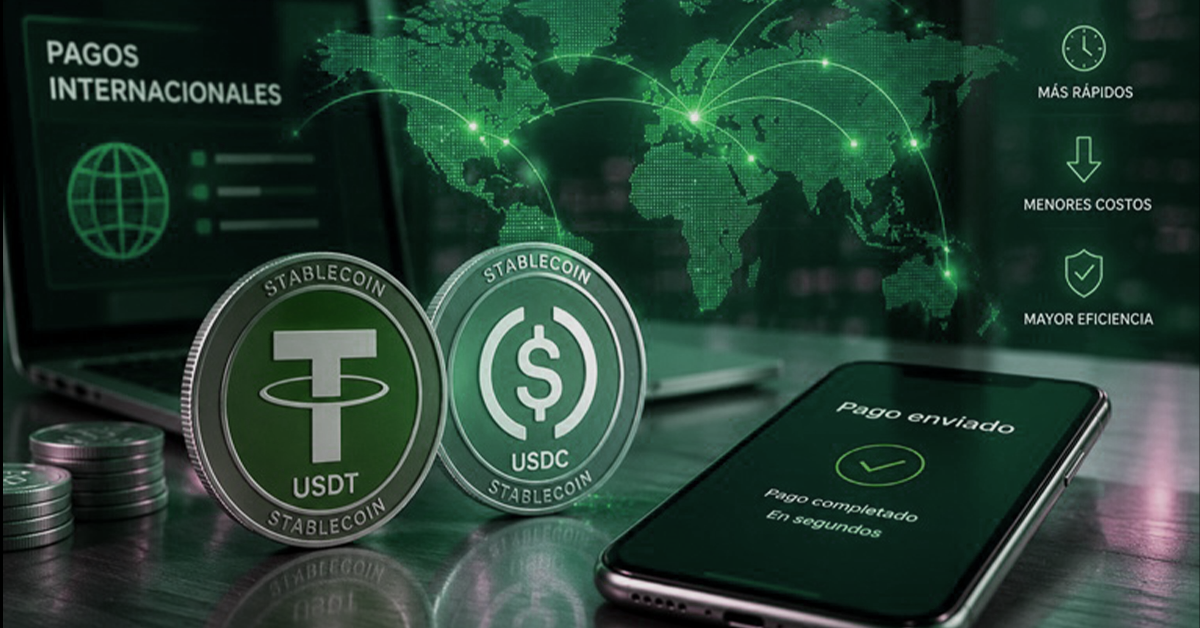
- International payments with stablecoins. Linka settles B2B payments in under 24 hours using USDC/USDT infrastructure, with a visible commission of 2% to 6% depending on volume. In corridors where getting bank dollars is slow, stablecoins offer an alternative route for the payment to arrive.
- OTC Desk. It converts large volumes between fiat currencies and stablecoins at desk pricing, without depending on the availability of dollars in cash.
- Trade Finance. It provides working capital to importers and exporters. The Peruvian company can sustain its operation while the collection cycle completes.
The limits should be clear. Linka is an intermediary and charges a commission. Each transaction requires company verification and supporting documentation. The regulatory framework for virtual assets differs by country and should be reviewed before structuring any operation.
Key data
- Peru–Bolivia trade: USD 407 million in Q1 2026. (Sunat / Idexcam-CCL, May 2026)
- Virtual asset transactions in Bolivia: USD 294 million from January to May 2025, +630% year over year. (BCB, June 2025)
- The BCB authorized virtual asset transactions under Board Resolution No. 084/2024, dated June 25, 2024.
- Peruvian exports to Honduras: USD 118.9 million from January to November 2025, +16.7%. (ADEX, January 2026)
- The BCH covered 75.5% of dollar demand in its April 2025 auction. (La Prensa HN, April 2025)
Frequently asked questions
What is a payment corridor?
It is the financial route through which payments flow between two countries, for example Peru–Bolivia. Each corridor has its own currencies, correspondent banks, FX regulation, costs and settlement times.
Why is it hard to collect export payments from Bolivia?
Because Bolivia has faced a dollar shortage since 2023. A Bolivian buyer may hold funds in bolivianos and still be unable to obtain dollars in time to pay a foreign supplier.
Can stablecoins be used for payments with Bolivia?
The Central Bank of Bolivia authorized virtual asset transactions through financial institutions in June 2024, and their use has grown sharply since. Each transaction should be structured with providers that apply verification processes and follow current regulation.
How does dollar access work in Honduras?
The Central Bank of Honduras allocates foreign currency through an auction system. When demand exceeds supply, companies receive only part of what they request, which can delay payments abroad.
What can a Peruvian company do to reduce risk in these corridors?
Assess the buyer's ability to pay in dollars, not just its solvency; negotiate payment terms according to the corridor; and consider alternative payment routes and working capital financing while collection completes.
Conclusion
Selling to Bolivia and Honduras is not only a commercial decision. It's a payment corridor decision: how the money will arrive, how long it will take and at what cost.
If your company exports or imports through these corridors, a useful first step is to review how many days your last collections or payments took, and how much of that delay came from dollar access. Linka's team can analyze that cycle with you and assess which payment route fits each transaction. Contact us at linka.xyz.