
OTC Desk vs. Exchange: What Changes for a Treasury Moving Large Amounts
Por Linka Finance
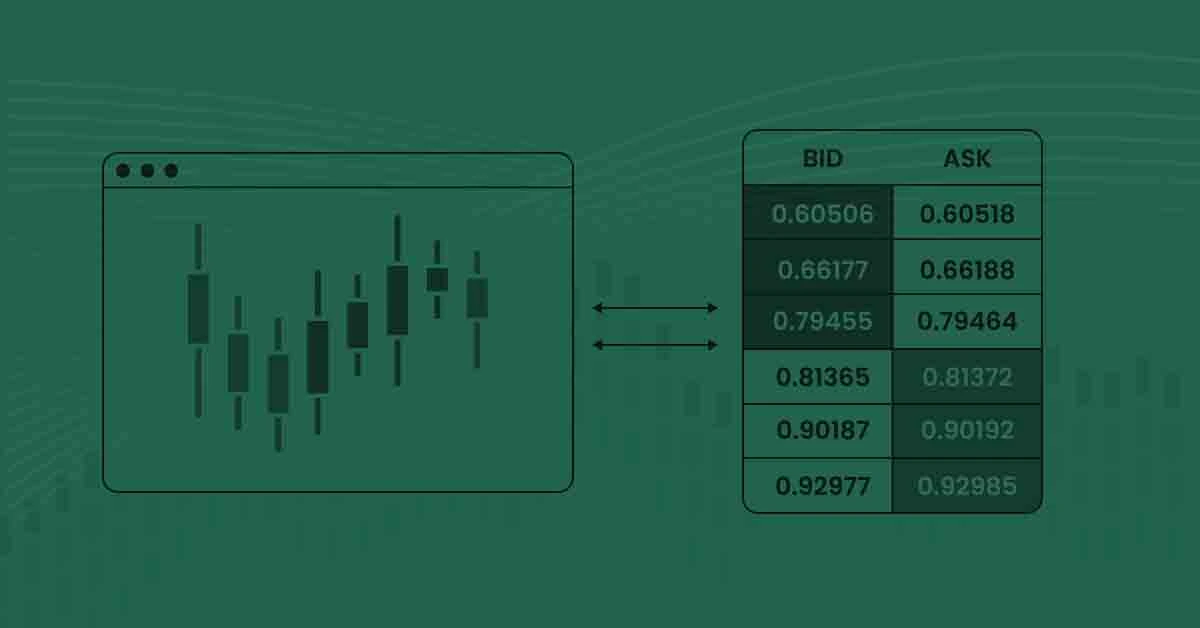
A $4 million market sell order can clear out every nearby buy order on a crypto exchange's book within seconds, pushing the executed price well below the quote a trader saw a moment earlier (ECOS, Slippage in Crypto Trading, 2025). That is not a hypothetical for a corporate treasury converting six or seven figures into stablecoins. It is the mechanical reason two people can look at the same exchange screen, agree on a price, and still receive two different numbers once the order actually fills. An OTC desk exists specifically to take that mechanic out of the equation — but understanding why requires looking at what happens inside an order book when a large order lands on it.
What Happens Inside an Order Book When a Large Order Lands
An exchange matches your order against whatever buy or sell orders are already sitting on its book, starting at the best available price and working outward. If you want to buy $500,000 of an asset but the book only has $50,000 in sell orders near the current price, your order consumes that liquidity and then keeps filling at progressively worse prices until it is complete — a cost known as price impact (Altrady, Crypto Slippage, 2026). The larger the order relative to the book's depth, the more the average execution price drifts from the quote you started with.
Institutional traders manage this with execution algorithms — TWAP and VWAP strategies that break one large order into many smaller ones, timed across an hour or a day to minimize the footprint each individual fill leaves on the book (ECOS, 2025). It works, but it trades price certainty for time: a treasury that needs a payment to settle today does not always have a day to spread the order across. And even with disciplined execution, slippage does not disappear — Binance Research found that retail traders experienced roughly 0.4 percentage points more slippage than institutional traders on average in late 2024, a gap driven by execution timing and order sizing, not by a different market.
The Other Friction: Getting a Corporate Account Ready to Trade at All
Price impact is not the only cost a treasury absorbs on an exchange. Opening and verifying a corporate account comes with its own timeline. Advanced-tier verification — the tier that unlocks the withdrawal limits a treasury actually needs — commonly requires manual review, which can extend onboarding to 24–48 hours even at exchanges with automated systems (Bitget Academy, Crypto Exchange KYC Guide, 2026). And how rigorous that review actually is depends heavily on where the exchange operates: as of June 2025, the Financial Action Task Force found that only 29% of the 138 jurisdictions it assessed were largely compliant with Recommendation 15, the global standard requiring virtual asset providers to apply the same AML/CFT scrutiny as banks (FATF data, cited in Zyphe, Crypto KYC Compliance 2026). In practice, that means the compliance experience — and the trust a treasury can place in it — varies meaningfully from one platform to the next, even before a single trade is placed.
Why Institutional Flow Has Been Moving to OTC
These two frictions — price impact and onboarding uncertainty — help explain a broader shift in where large trades actually happen. Institutional OTC crypto volumes grew 109% year-over-year through the end of 2025, more than ten times the 9% growth recorded across the top 20 centralized exchanges over the same period (Finery Markets, 2026 Institutional OTC Trading Outlook). Forty percent of institutions surveyed now name OTC desks as their first-choice execution venue, and stablecoins' share of institutional OTC volume rose from 23% in 2023 to 78% in 2025 as more of that flow became payment-related rather than purely speculative.
An OTC desk negotiates one fixed price for the full amount and settles privately, off the public order book, which removes price impact from the transaction entirely — the price you agree to is the price you get, regardless of size. That trade-off is not free of risk; it simply moves the risk from execution mechanics to counterparty reliability, since you are trusting a single desk to hold and deliver your funds rather than trusting a public market to absorb your order. It also is not always the right tool: a company making a small, one-off conversion, or one that specifically needs a wide selection of lesser-traded tokens, is often better served by an exchange than by negotiating a bespoke OTC relationship.
How This Plays Out for a Treasury Converting Local Currency in LATAM
For a company converting local currency into digital dollars to pay international suppliers, the relevant comparison is rarely "which platform has the best headline rate." It is which one gives a predictable, all-in cost on the actual size the treasury needs to move. Linka's OTC desk quotes one negotiated price per transaction, with a transparent commission of between 2% and 6% depending on volume disclosed before the trade, and settles without requiring the company to hold a foreign bank account. Corporate onboarding is built around the transaction a treasury is actually trying to complete, rather than a generic retail verification ladder designed for individual traders.
The Numbers Behind the Comparison
- Institutional OTC crypto volumes grew 109% year-over-year through the end of 2025, versus 9% growth across the top 20 centralized exchanges in the same period (Finery Markets, 2026 Institutional OTC Trading Outlook).
- Stablecoins' share of institutional OTC transaction volume rose from 23% in 2023 to 78% in 2025 (Finery Markets, 2026).
- Retail traders experienced roughly 0.4 percentage points more slippage than institutional traders on average in late 2024, driven by execution timing and order sizing (Binance Research, cited late 2024).
- Advanced-tier exchange verification, the level that unlocks meaningful withdrawal limits, can still require 24–48 hours of manual review (Bitget Academy, Crypto Exchange KYC Guide, 2026).
- Only 29% of 138 jurisdictions assessed by the Financial Action Task Force were found largely compliant with Recommendation 15, the global AML/CFT standard for virtual asset providers, as of June 2025 (FATF, cited in Zyphe, 2026).
FAQ
What is an OTC desk, and how is it different from an exchange?
An exchange matches your order against a public order book of other buyers and sellers, where large orders can move the price against you. An OTC (over-the-counter) desk negotiates one fixed price directly with you for the full amount and settles the trade privately, which removes the price-impact risk that comes with order-book execution.
Why can a large order on an exchange cost more than the quoted price?
Because the quoted price only reflects what is available at the very top of the order book. A large order consumes that liquidity and continues filling at progressively worse prices until it is complete — a cost known as price impact or slippage.
When does it make more sense to use an exchange instead of an OTC desk?
For smaller, one-off conversions, or when a company specifically needs access to a wide range of lesser-traded tokens that an OTC desk may not quote, an exchange is often the simpler option.
How long does it take a company to verify a corporate account on an exchange?
It varies by platform, but advanced-tier verification — the level needed for meaningful withdrawal limits — commonly involves manual review that can take 24 to 48 hours, even at exchanges with largely automated onboarding.
Does Linka's OTC desk have a minimum transaction size?
Linka's OTC desk is built for companies converting meaningful volumes between local currency and digital dollars; the team can walk through minimums and pricing for a specific transaction size directly.
What if my company needs to move large amounts regularly, not just once?
That is the scenario an OTC relationship is generally built for — a recurring counterparty with a known pricing structure and settlement process, rather than re-absorbing price impact and onboarding friction on a public exchange every time.
The Real Question Isn't Which Platform Is Better
It is which type of risk your treasury is better positioned to manage: the price-impact risk of a public order book, or the counterparty risk of a negotiated relationship. Most companies moving meaningful volume choose to manage the second, because it is the one they can actually evaluate in advance — through the questions they ask before signing, not through what an order book happens to do on a given day.
If your company is converting significant volumes between local currency and stablecoins, Linka's team can walk through exactly how the desk prices a transaction your size, at linka.xyz.