
Linka at Peru Blockchain Conference 2026: What International Payment Leaders Actually Asked About
Por Linka Finance
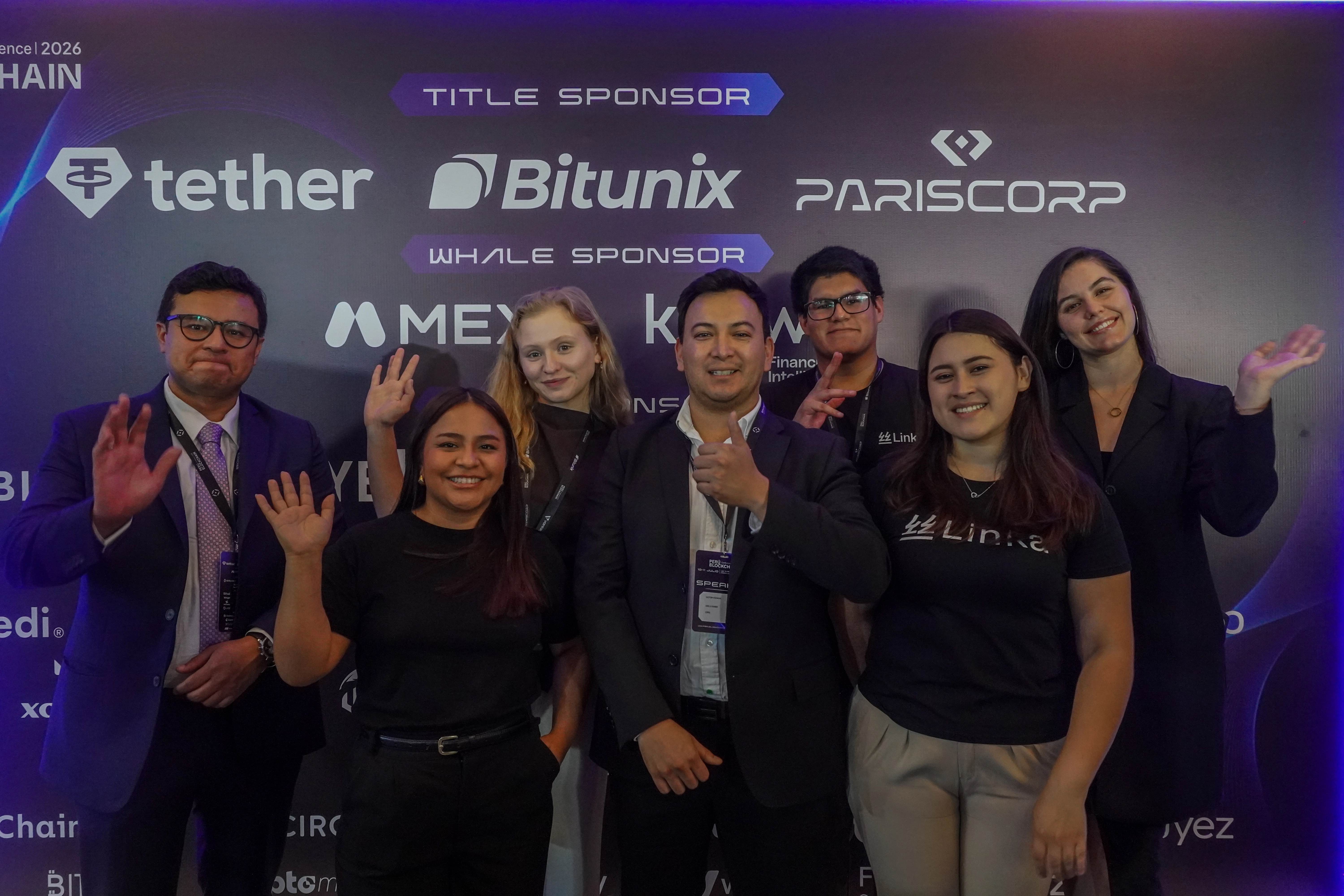
More than 5,000 people passed through the JW Marriott Larcomar in Miraflores on July 10 and 11 for the fifth edition of Peru Blockchain Conference (PBCONF26). Most of them were not there for the panels. They were there because their companies move money across borders for a living paying suppliers in Asia, collecting from buyers in Europe, financing shipments that sit in transit for weeks, and the tools built for that job have not kept pace with how fast trade actually moves. Banks remain the most expensive channel for cross-border transfers, charging an average of 13.4% per transaction, according to the World Bank's Remittance Prices Worldwide report (Q2 2024). Linka joined PBCONF26 as a Gold Sponsor to talk through what changes when that channel runs on stablecoin rails instead, and just as often, to explain what does not change.
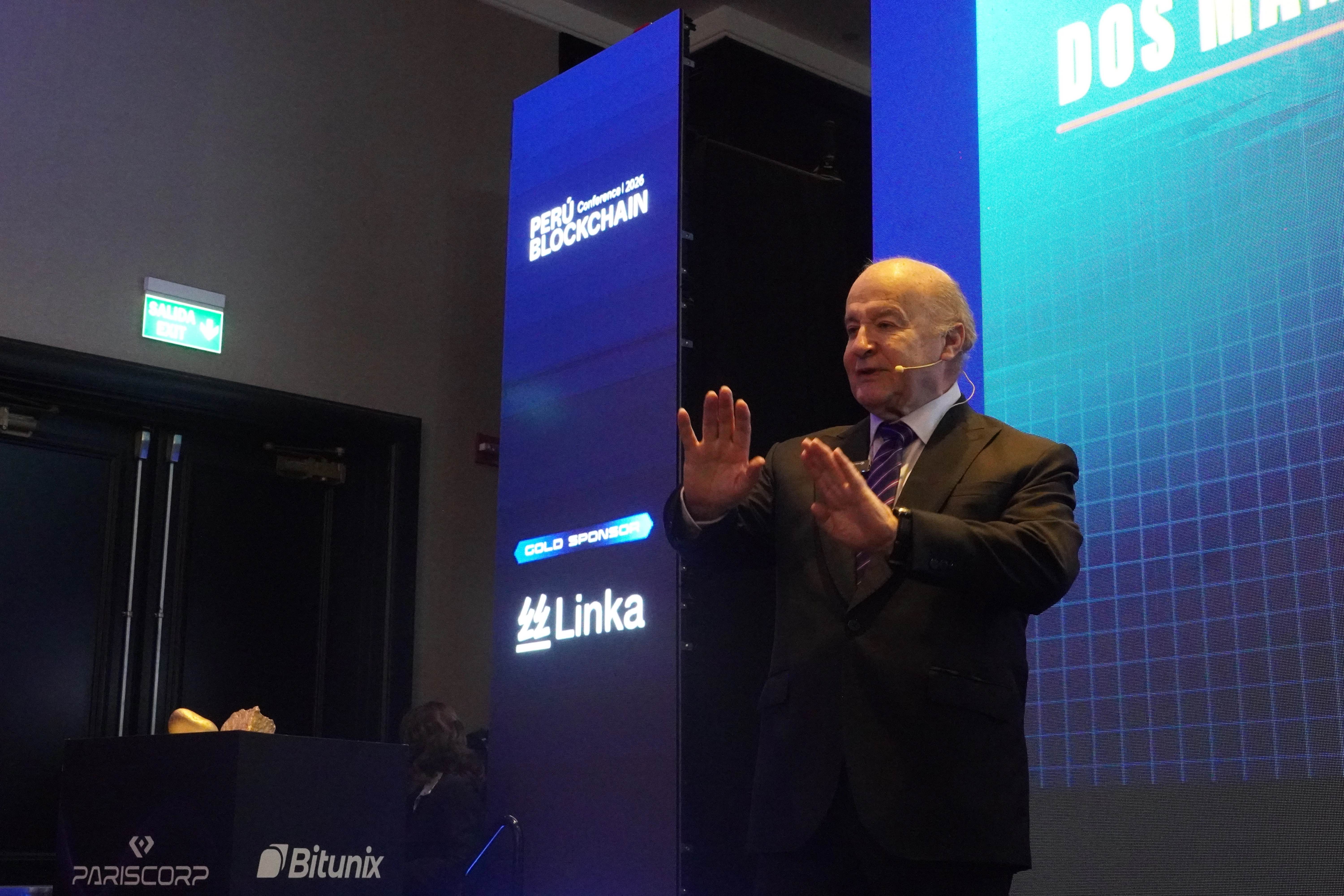
Peru Blockchain Conference 2026: A Regional Event That Outgrew Its Own Projections
PBCONF26 is organized by LATAM Blockchain Events and has run for five consecutive years, but this edition drew a different crowd. Attendance surpassed 5,000, up from prior years, and the sponsor list expanded to include Tether, Bitunix, and Pariscorp as Title Sponsors, MEXC and Koywe as Whale Sponsors, and Binance, Bybit, Vantage, Meru, and Linka among the Gold Sponsors. Cardano founder Charles Hoskinson joined via a virtual session, and the event announced the launch of LATAM Blockchain Academy, a free education initiative built with Bitunix.
The growth reflects a broader shift in the country. According to the Informe Blockchain LATAM 2025 by Sherlock Communications, 3.7% of Peruvians, more than one million people, now use cryptocurrency, roughly double the figure recorded less than two years earlier. Regionally, Latin America's on-chain transaction value grew 63% year-over-year between July 2024 and June 2025, the second-fastest growth rate of any region worldwide after Asia-Pacific (Chainalysis, 2025 Global Crypto Adoption Index). For a company like Linka, built specifically around B2B payment infrastructure in Latin America, that is not a speculative trend. It is a change in how corporate treasuries are already moving dollars.
Why the Traditional Rails Still Lose Money in Transit
The friction Linka's team spent two days discussing at the booth is structural, not anecdotal. A cross-border B2B payment routed through correspondent banking typically passes through two or three intermediary banks before it reaches its destination, and each one applies its own fee and FX spread, often without disclosing the total cost upfront. The World Bank's most recent quarterly data puts the average bank cost at 13.4%, more than double the UN's Sustainable Development Goal target of under 3% by 2030.
Trade finance carries a parallel gap. The Asian Development Bank's 2025 Global Trade Finance Gap Survey puts unmet demand for trade finance at $2.5 trillion globally, roughly 10% of total global trade, a figure that has stayed flat since 2023 despite growing demand from supply chain diversification. Smaller importers and exporters absorb most of that gap: multinational corporations face a trade finance rejection rate of around 7%, while SMEs are rejected far more often, according to WTO data cited in the same survey. Banks in smaller or higher-risk markets have also been quietly withdrawing correspondent relationships for years, a trend documented by the BIS since 2019, which narrows, not widens, the options available to LATAM importers working with suppliers in Asia or Europe.
What the Linka Team Actually Walked People Through
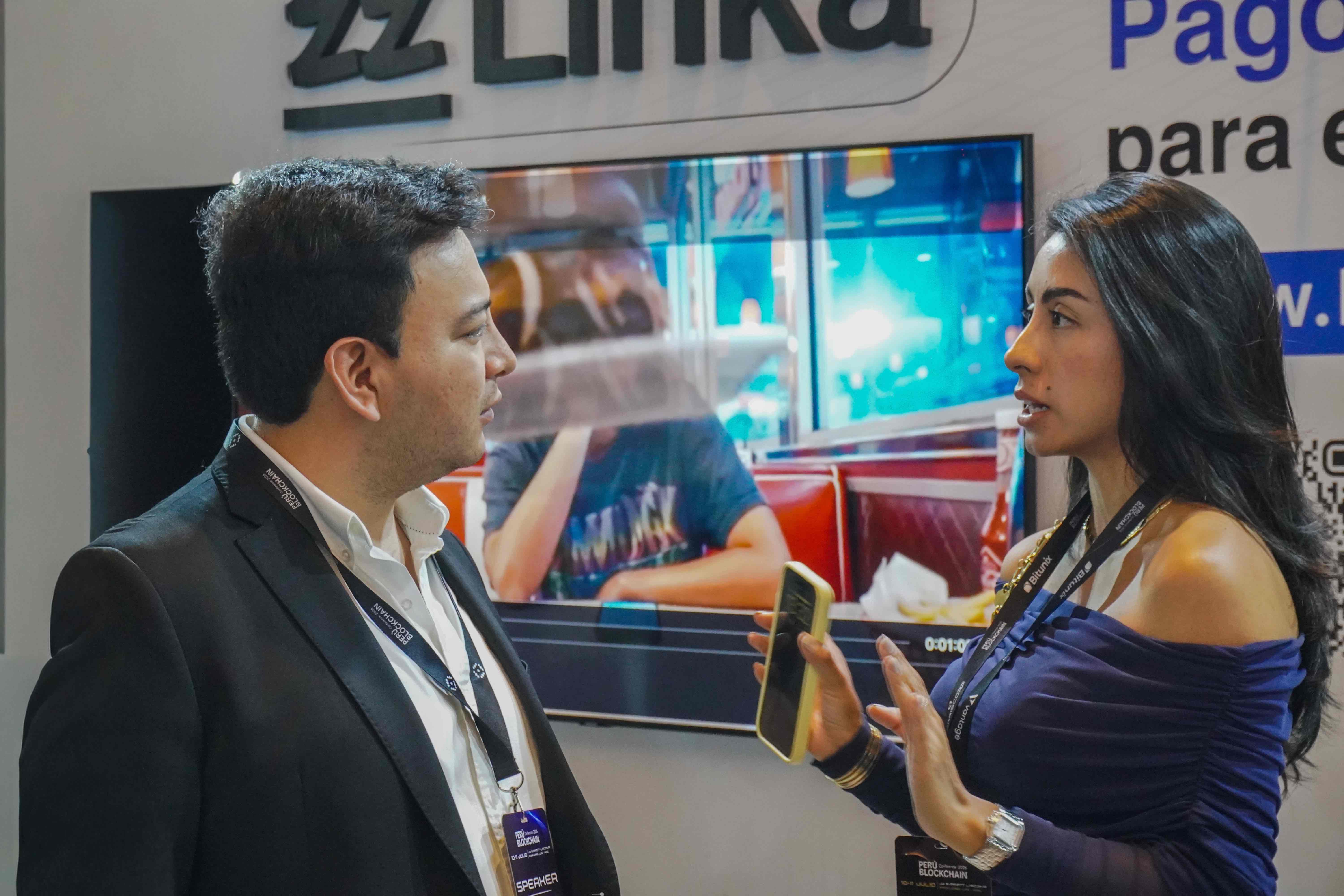
At the booth, the questions were rarely about blockchain in the abstract. They were operational: how fast does a payment settle, what happens to the exchange rate, and what does the company on the other end actually receive.
The answer the Linka team gave, repeatedly, was the same one the platform runs on. Linka converts local currency into digital dollars (USDC and USDT), settles international supplier payments in under 24 hours, and charges a transparent commission of between 2% and 6% depending on transaction volume, disclosed upfront, not folded into a hidden spread. For importers and exporters, the team also walked visitors through Linka's trade finance product: working capital and pre-export financing structured so a company does not have to freeze cash on hand while goods are in transit, a direct response to the gap the ADB survey describes.
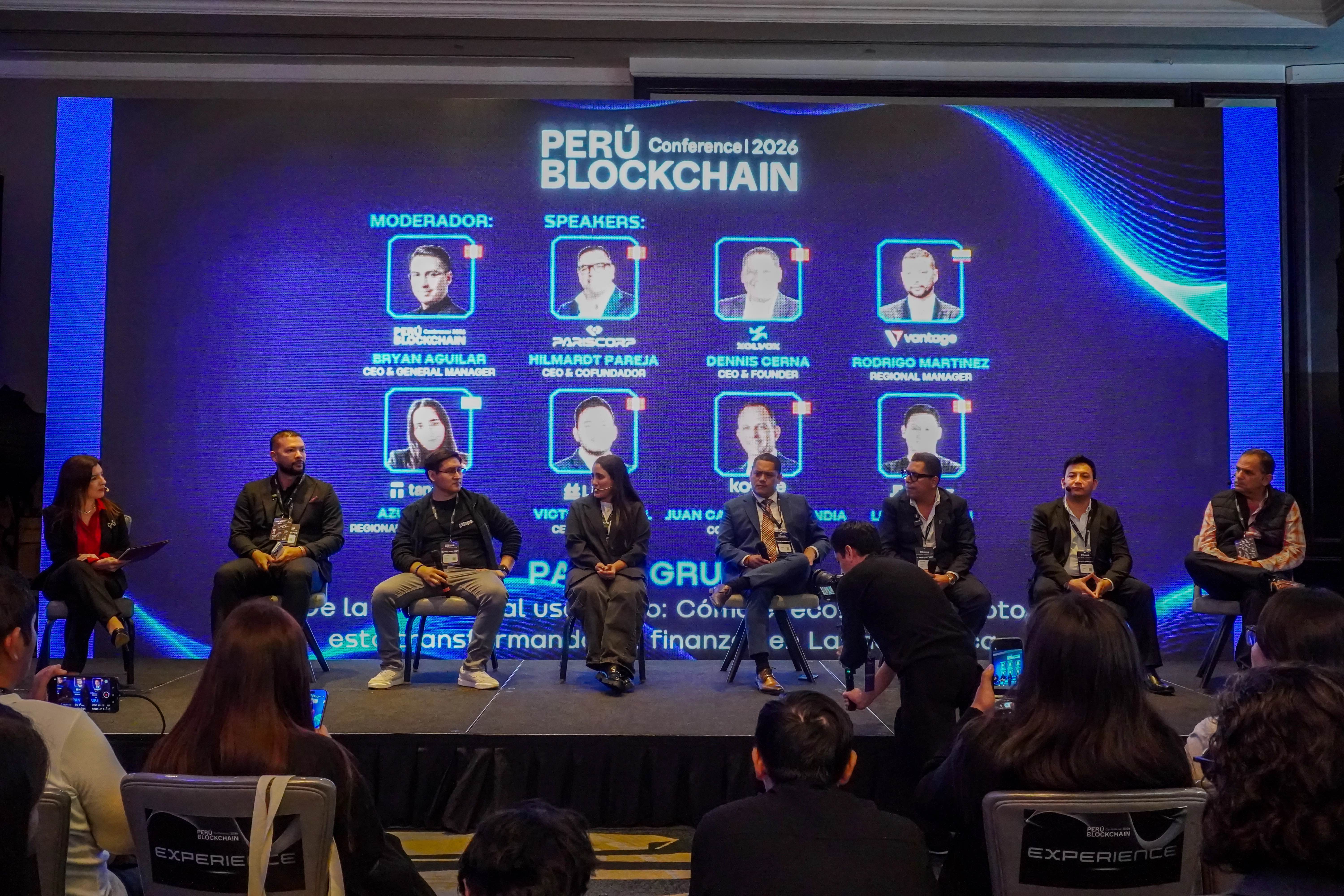
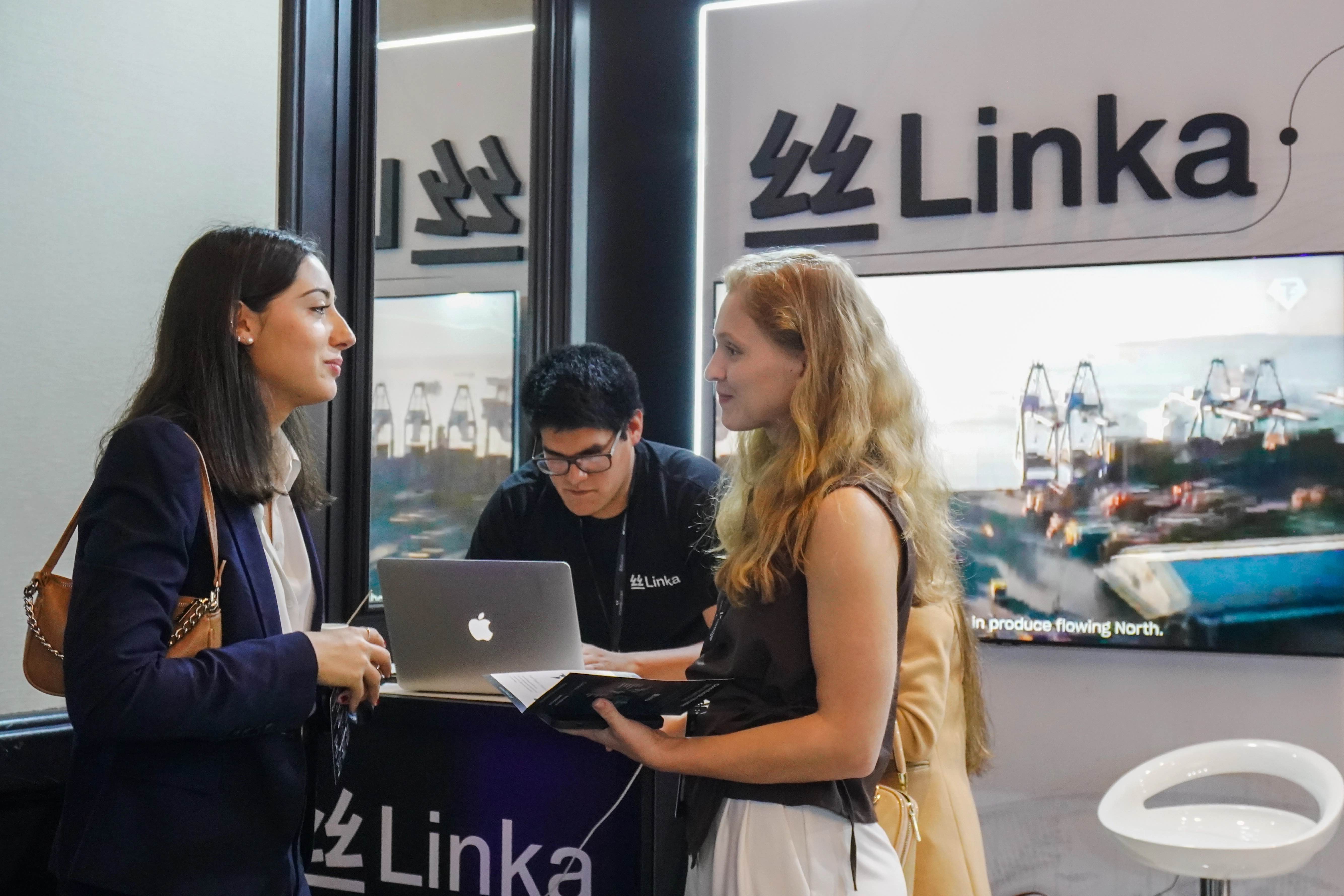
The conversations were not limited to the booth. Alberto Escárate, Linka's Head of Trade Finance, joined a panel with speakers from MEXC, Bybit, and other regional players to discuss how newer payment infrastructure compares with, and, in several cases, plugs directly into, the banking system trade finance operators already use. Anastasia Nikitina, from Linka's Business Development team, led conversations with founders and corporate treasurers about specific payment corridors, including how OTC desk pricing works for companies converting large volumes between crypto and fiat.
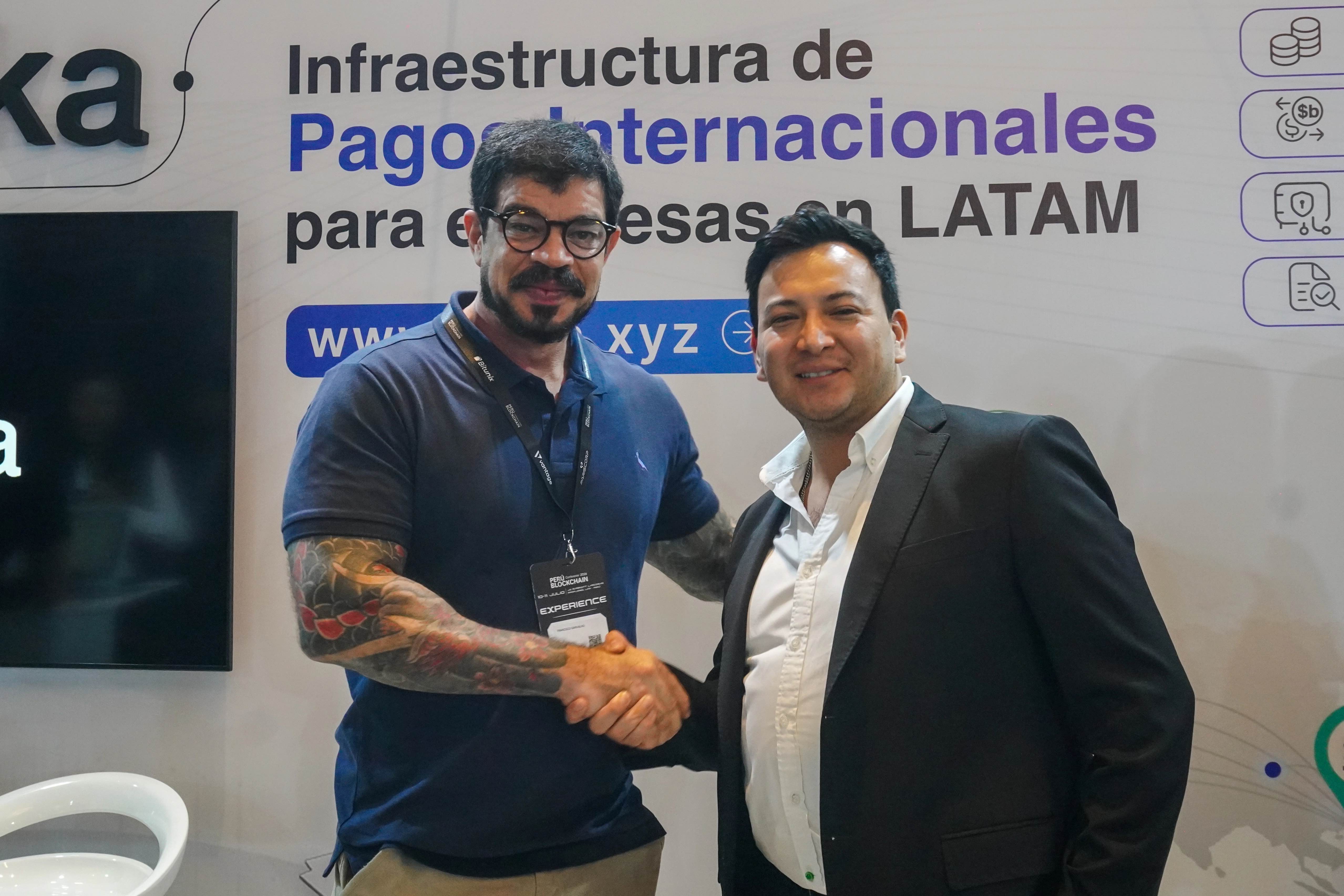
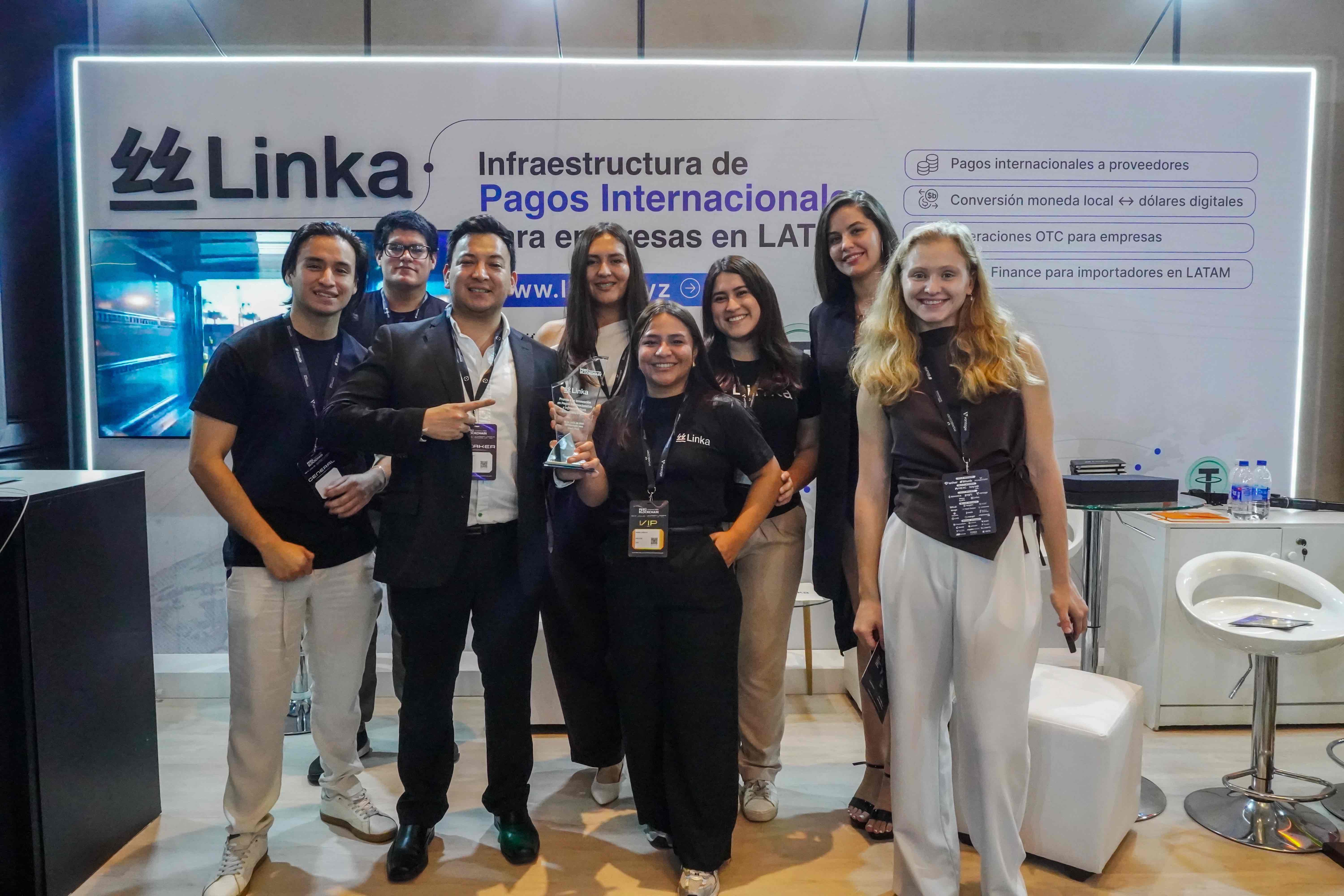
The two days closed with a recognition the team did not anticipate walking in: Linka received the Innovation Award for International Payments and Digital Financial Infrastructure at the official PBCONF26 awards ceremony, the company's first recognition of this kind, arriving as Linka continues scaling cross-border B2B stablecoin payments across Latin America. Among the strategic partners the team met at the event were Pierina Alonso Castillo, Tether's Expansion Manager for Peru, and Francisco Carvalho, Founder and CEO of Blockchain.Rio.
The Numbers Behind the Conversation
The data points that came up most often at the booth were not about Linka specifically, they were about the environment every company at PBCONF26 is now operating in.
- Latin America's on-chain transaction value grew 63% year-over-year between July 2024 and June 2025, trailing only Asia-Pacific globally (Chainalysis, 2025 Global Crypto Adoption Index).
- More than 90% of crypto flows in Brazil, the region's largest crypto economy, are now stablecoin-related (Chainalysis, citing Reuters reporting, February 2025).
- In Argentina, stablecoins accounted for more than half of all Argentine peso exchange purchases between July 2024 and June 2025 (Chainalysis, 2025).
- Banks remain the most expensive way to move money across borders, at an average cost of 13.4% per transaction, more than double the digital-only alternative average of 4.24% (World Bank, Remittance Prices Worldwide, Q2 2024).
- The global trade finance gap held at $2.5 trillion in 2025, unchanged from 2023, representing roughly 10% of global trade (Asian Development Bank, Global Trade Finance Gap Survey, 2025).
Taken together, the pattern is consistent: adoption is accelerating fastest in the economies where the traditional banking gap is widest, and the businesses feeling that gap are exactly the CFOs, treasurers, and comex operators who filled the JW Marriott Larcomar for two days.
FAQ
What is Linka and what does it do in Latin America?
Linka is a B2B fintech platform, headquartered in Peru with operations across Latin America, that provides infrastructure for international payments, trade finance, and OTC crypto-to-fiat conversion. It converts local currency into digital dollars and settles cross-border supplier payments in under 24 hours.
How did Linka participate in Peru Blockchain Conference 2026?
Linka joined PBCONF26 (July 10–11, JW Marriott Larcomar, Lima) as a Gold Sponsor, running a booth and joining panel discussions with speakers from MEXC, Bybit, and other regional fintech and exchange companies to discuss cross-border payments and trade finance infrastructure.
What recognition did Linka receive at PBCONF26?
Linka received the Innovation Award for International Payments and Digital Financial Infrastructure at the official PBCONF26 awards ceremony, the company's first recognition of this kind.
How do stablecoin payments work for B2B cross-border transfers?
A company sends local currency to a licensed payment partner, which converts it into a dollar-pegged stablecoin such as USDC or USDT. The stablecoin settles internationally in minutes to hours rather than days, and the receiving company can convert it back into local currency or hold it as a dollar balance.
What is trade finance with stablecoins, and how does it help importers and exporters?
It provides working capital or pre-export financing settled in stablecoins, letting a company pay suppliers or fund production without tying up cash reserves while goods are in transit addressing the same liquidity gap the ADB's Global Trade Finance Gap Survey estimates at $2.5 trillion globally.
Does Linka operate only in Peru?
No. Linka is headquartered in Peru but operates across Latin America, working with companies handling cross-border payments, trade finance, and treasury operations throughout the region.
What Happens After the Booth Comes Down
PBCONF26 ran for two days. The conversations that started there about payment corridors, settlement times, and how much of a transfer actually reaches its destination do not end when the event does. That is largely the point of attending: the questions raised at a booth are usually the same ones a treasury team is already asking internally, just without a clear place to bring them.
If your company is evaluating how it pays international suppliers or finances trade across Latin America, the team that was in Miraflores is the same one available at linka.xyz.